BPOM registration for imported supplements in Indonesia: what brands need to know
BPOM MD vs ML, halal screening, Bahasa Indonesia labels, and dossier completeness — what foreign supplement brands need to know before entering Indonesia's regulated market.
Created:
Updated:
BPOM registration for imported supplements in Indonesia: what brands need to know
Indonesia is Southeast Asia's largest market by population and one of the fastest-growing for health supplements. But its regulatory framework, administered by BPOM (Badan Pengawas Obat dan Makanan, the National Agency of Drug and Food Control), is among the most complex in the region for foreign brands to navigate.
MD vs ML: the first classification decision
BPOM uses two classifications that determine your registration pathway.
MD (Makanan Dalam) covers domestically produced products. If your product is manufactured in Indonesia, it registers under MD.
ML (Makanan Luar) covers imported products. If your product is manufactured outside Indonesia and imported, it registers under ML. This is the pathway for most foreign brands.
The ML registration requires a local sponsor, an Indonesian-registered company that takes on regulatory responsibility for the product. Foreign brands without a local entity must partner with a distributor or third-party sponsor before they can register.
What BPOM registration covers
BPOM registration for health supplements (suplemen kesehatan) requires:
Product documentation. A complete dossier including product formulation, specifications, certificate of analysis (CoA), manufacturing site GMP certificate, certificate of free sale from the country of origin, stability data, and label artwork. Missing or incomplete documentation is the most common reason registrations are delayed or rejected.
Ingredient permissibility. BPOM maintains positive lists for permitted ingredients in health supplements. Ingredients not on the permitted list, or exceeding maximum permitted levels, cannot be registered. Botanicals and proprietary blends with ingredients common in Australian or US products frequently hit this barrier in Indonesia.
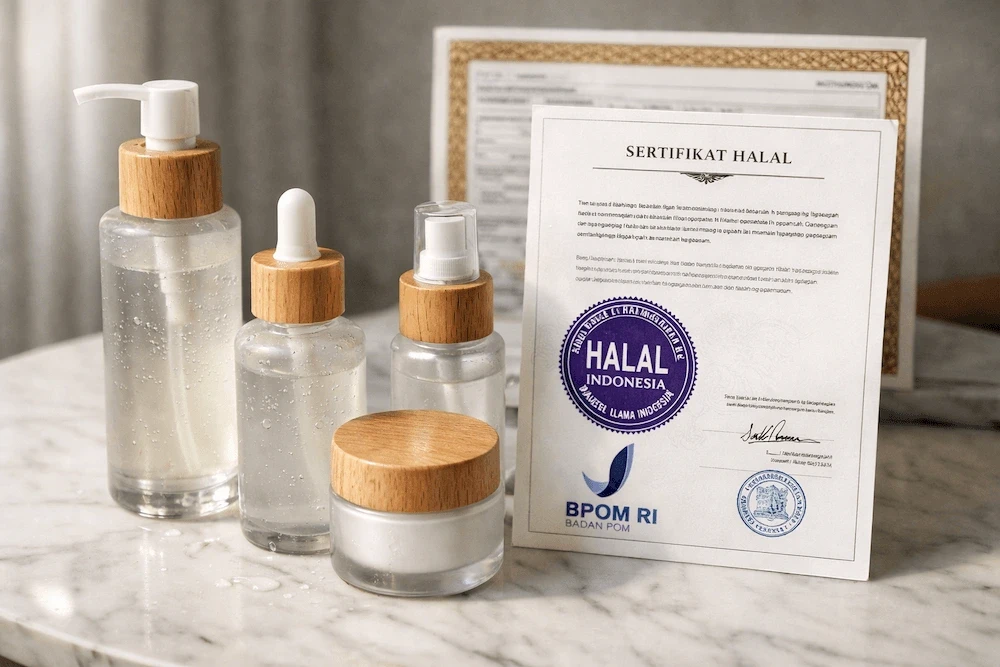
Halal screening. Indonesia is the world's largest Muslim-majority country, and MUI (Majelis Ulama Indonesia) halal certification is practically required for commercial success in most supplement categories. Halal screening against MUI prohibited substance lists should happen before registration, not after. Finding a non-halal ingredient post-registration means reformulation and re-registration.
Label compliance. Indonesian labels must include all mandatory fields in Bahasa Indonesia. This is non-negotiable. Brands often underestimate the translation and reformatting requirements. The BPOM label format differs significantly from Australian, European, or US equivalents.
Timeline and practical realities
BPOM registration for imported supplements typically takes 6 to 18 months depending on product complexity, completeness of documentation, and current BPOM processing volumes. This is not a process to start when you've already committed to a launch date.
The most common causes of delay: incomplete dossier at submission (missing stability data, incorrect CoA format), ingredients not on the positive list requiring reformulation, label artwork rejected for non-compliant format or missing fields, and local sponsor issues (incorrect entity type, lapsed GMP certificates).
The halal and regulatory parallel path
For most brands, MUI halal certification and BPOM registration run in parallel rather than sequentially. Halal certification is not formally required by BPOM for all product categories, but without it, commercial distribution through major channels (supermarkets, pharmacies, online platforms) is severely limited. Starting halal screening at the same time as dossier preparation saves months.
Taama covers BPOM MD/ML classification, ingredient permissibility, MUI halal screening, label compliance in Bahasa Indonesia, and dossier completeness for supplement brands entering Indonesia. See our Indonesia coverage

" height="24px" id="O1AlXBJVR" width="24px"/></svg>)